---
title: "Future-Proofing Your Roof: The Seasonal Roof Underlayment Performance Checklist"
description: Learn how to inspect your roof underlayment each season. Discover common roofing issues, signs of underlayment failure, and when to upgrade to high-performance synthetic or peel-and-stick protection.
image: https://blog.ecp.itape.com/hubfs/4%20Seasons%20Checklist_Header-1.jpg
---
[Skip to content](https://blog.ecp.itape.com/future-proofing-your-roof-the-seasonal-roof-underlayment-performance-checklist#main-content)
Connect with an expert: [800-565-2000](tel:800-565-2000) | [Contact Us](https://ecp.itape.com/contact-us/)
LANGUAGE:
- [en](https://ecp.itape.com/)
- [fr](https://fr.ecp.itape.com/)
- [News](https://blog.ecp.itape.com/)
- [IPG](https://www.itape.com/)
[](https://www.itape.com/)
[](https://ecp.itape.com/)
- [Products](https://ecp.itape.com/products/)
- [Applications](https://ecp.itape.com/applications/)
- [Sustainability](https://ecp.itape.com/sustainability-2/)
- [RESOURCES ](https://ecp.itape.com/blogs/)
- [About Us](https://ecp.itape.com/about-us/)
- - [News](https://ecp.itape.com/blogs/)
- [IPG](https://www.itape.com/)
# Future-Proofing Your Roof: The Seasonal Roof Underlayment Performance Checklist

Jul 203, 2026 · 3 min read
Your roof is more than shingles. It's a complete protection system, and the shingles are only as effective as the roof underlayment beneath them.
Whether your roof uses traditional felt or a standard synthetic underlayment, changing weather conditions create a year-round stress test for your roof's secondary water barrier. Seasonal inspections can help identify issues before they become costly repairs.
Use this seasonal checklist to evaluate your roof's performance and determine whether it's time to upgrade to a high-performance roof underlayment system like [**NovaSeal®** or **PALISADE™**](https://ecp.itape.com/roof-underlayment/).
### Spring: The "Fastener Integrity" Check
As spring arrives, it's important to inspect the roofing materials and attachment points that endured months of winter snow, ice, and strong winds.
###### What to Do
- Clean gutters and downspouts.
- Inspect rooflines for shingle lifting or "humps."
- Look for signs of loose or displaced shingles.
###### Common Underlayment Failure
Lower-quality synthetic underlayments may have reduced tear resistance. After a season of wind uplift and freeze-thaw cycles, fasteners can pull through the material, creating openings that expose the roof deck to moisture.
###### Why It Matters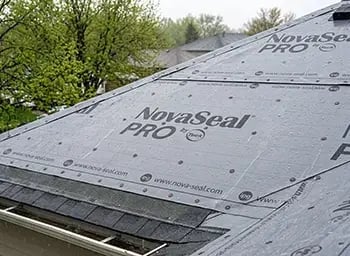
A compromised underlayment can allow spring rainwater to penetrate beneath the shingles, increasing the risk of deck damage and leaks.
###### Recommended Solution
[**NovaSeal® synthetic underlayment**](https://ecp.itape.com/product/novaseal-pro/) is engineered for high tensile and tear strength, helping maintain secure fastener attachment and continuous weather protection.
**Takeaway:** If your roof shows signs of shingle movement or underlayment displacement, the system may no longer be providing reliable protection.
## Summer: Audit Thermal Stability and Heat Resistance
Extreme summer temperatures can affect roofing materials from both outside and inside the home.
###### What to Do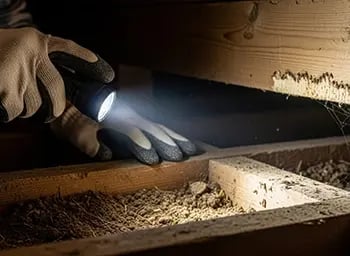
- Verify attic ventilation is functioning properly.
- Look for wavy, distorted, or uneven shingle lines.
- Check for signs of excess attic heat.
###### Common Underlayment Failure
Traditional asphalt felt can become brittle over time. Some synthetic underlayments may also experience dimensional movement, causing wrinkles or buckles beneath shingles.
###### Why It Matters
Underlayment movement can affect shingle alignment, roof appearance, and long-term weather protection.
###### Recommended Solution
[**PALISADE™ underlayment systems**](https://ecp.itape.com/product/palisade-udl/) are designed for thermal stability and high-temperature performance, helping maintain a smooth roof surface without expansion-related wrinkling.
**Takeaway:** A flat, stable roof surface helps maximize both shingle performance and roof lifespan.
Autumn: Test Your Roof's Moisture-Shedding Performance
Falling leaves and organic debris can block water flow in gutters, valleys, and roof transitions.
###### What to Do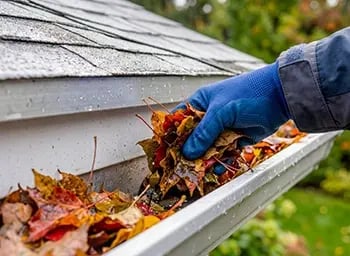
- Remove leaves and debris from roofs and gutters.
- Inspect valleys and drainage paths.
- Check attic spaces for signs of dampness, mold, or soft roof decking.
###### Common Underlayment Failure
Traditional felt underlayment can absorb moisture, while lower-grade synthetic products may allow moisture migration over time.
###### Why It Matters
Moisture intrusion can damage roof sheathing, encourage mold growth, and reduce the structural integrity of the roof system.
###### Recommended Solution
High-performance synthetic underlayments such as [NovaSeal®](https://ecp.itape.com/product/novaseal-prime/) and [PALISADE™](https://ecp.itape.com/product/palisade-sa-ht/) are designed to resist water absorption and help keep roof decks dry during prolonged wet conditions.
**Takeaway:** If moisture is reaching the sheathing, the roof's secondary water barrier may no longer be performing effectively.
### Winter: The Ultimate Hydrostatic Pressure Test
Winter places the greatest demands on a roofing system. Snow accumulation, freeze-thaw cycles, and ice dams can create standing water that challenges even well-built roofs.
###### What to Do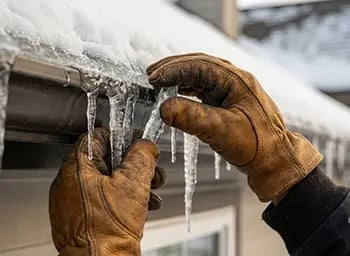
- Watch for large icicles and ice dams along eaves.
- Monitor attic spaces for frost, moisture, or water stains.
- Inspect roof edges after major thaw events.
###### Common Underlayment Failure
Thin or aging underlayments often fail around fastener penetrations when exposed to standing water and hydrostatic pressure.
###### Why It Matters
If water penetrates through fastener holes during an ice dam event, leaks can develop even when shingles appear intact.
###### Best Practice for Cold Climates
Building codes in many regions require an **ice and water shield** or **self-adhering membrane** along roof eaves in areas susceptible to ice dams. Roofing professionals often recommend extending protection in high-risk areas such as:
- Eaves
- Valleys
- Roof penetrations
- Low-slope sections
###### Recommended Solution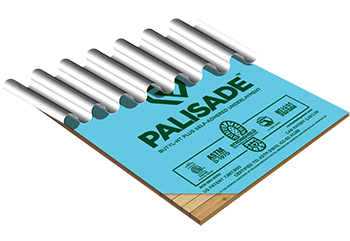
For maximum protection, install a high-performance peel-and-stick underlayment such as **[PALISADE™ SA-HT,](https://ecp.itape.com/product/palisade-sa-ht/) [PALISADE™ Butyl-HT](https://ecp.itape.com/product/palisade-butyl-ht/), or [PALISADE™ Butyl-HT PLUS](https://ecp.itape.com/product/palisade-butyl-ht-plus/)** in vulnerable areas and transition to premium synthetic underlayment across the remainder of the roof.
These self-adhering systems create a watertight seal around fasteners and help resist moisture intrusion caused by ice dams and standing water.
**Takeaway:** Winter leaks are often a sign that the underlayment—not the shingles—has reached the end of its performance life.
Signs Your Roof Underlayment May Need Replacement
Consider a professional roof inspection if you notice:
- Wrinkled or uneven shingles
- Shingle movement after storms
- Persistent attic moisture
- Water staining on roof decking
- Mold or mildew growth
- Recurring winter leaks
- Visible roof deck deterioration
## Upgrade Beyond Basic Roof Protection
Your roof underlayment is the critical layer that stands between your home and costly water damage. If seasonal inspections reveal moisture issues, movement, or deterioration, replacing shingles alone may not solve the problem.
Upgrade from traditional felt or entry-level synthetic products to a high-performance roofing system designed for durability, weather resistance, and long-term protection.
**NovaSeal® and PALISADE™ underlayments deliver advanced performance in demanding conditions—helping homeowners, builders, and roofing professionals protect what matters most.**
**Ready to upgrade your roof's secondary water barrier? [Contact us today](https://ecp.itape.com/contact-us/) to learn which NovaSeal® or PALISADE™ solution is right for your project.**
[Roof Underlayment](https://blog.ecp.itape.com/tag/roof-underlayment), [Metal Roofing](https://blog.ecp.itape.com/tag/metal-roofing), [Weather Protection](https://blog.ecp.itape.com/tag/weather-protection)
## Related posts
[](https://blog.ecp.itape.com/palisade-synthetic-underlayment-advanced-protection-for-your-roof?hsLang=en)
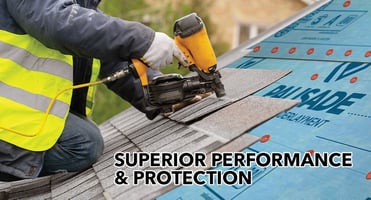
## [Palisade® Synthetic Underlayment: Advanced Protection for Your Roof](https://blog.ecp.itape.com/palisade-synthetic-underlayment-advanced-protection-for-your-roof?hsLang=en)
Apr 106, 2025
Palisade® Synthetic Underlayment is a high-performance roofing underlayment designed to provide...
[Read more](https://blog.ecp.itape.com/palisade-synthetic-underlayment-advanced-protection-for-your-roof?hsLang=en)
[](https://blog.ecp.itape.com/why-palisade-butyl-ht-plus-is-the-top-choice-for-self-adhered-roof-underlayment?hsLang=en)
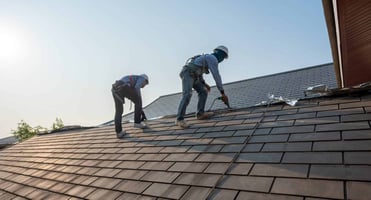
## [Why Palisade® Butyl-HT PLUS is the Top Choice for Self-Adhered Roof Underlayment](https://blog.ecp.itape.com/why-palisade-butyl-ht-plus-is-the-top-choice-for-self-adhered-roof-underlayment?hsLang=en)
Apr 98, 2026
When you invest in a new roof, you probably spend most of your time looking at shingles, tiles, or...
[Read more](https://blog.ecp.itape.com/why-palisade-butyl-ht-plus-is-the-top-choice-for-self-adhered-roof-underlayment?hsLang=en)
[](https://blog.ecp.itape.com/the-superior-choice-palisade-butyl-ht-roofing-underlayment?hsLang=en)
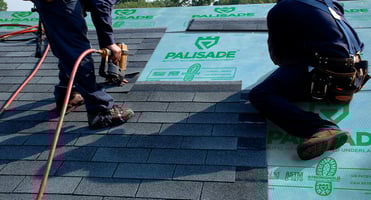
## [The Superior Choice: Palisade Butyl-HT Roofing Underlayment](https://blog.ecp.itape.com/the-superior-choice-palisade-butyl-ht-roofing-underlayment?hsLang=en)
May 135, 2025
Handles Extreme Temperatures Self-adhered high temperature butyl roofing is renowned for its...
[Read more](https://blog.ecp.itape.com/the-superior-choice-palisade-butyl-ht-roofing-underlayment?hsLang=en)
### Company
- [About IPG](https://www.itape.com/about-us-ipg/)
- [Our Blogs](https://ecp.itape.com/blogs/)
### Legal
- [Privacy Policy](https://www.itape.com/privacy-policy/)
- [Cookie Policy](https://www.novashield.com/cookie-policy/)
- [Terms & Conditions](https://www.itape.com/terms-and-conditions-at-ipg/)
- [Terms of Use](https://www.itape.com/terms-of-use/)
- [Supply Chain Social Responsibility](https://www.itape.com/supply-chain-social-responsibility/)
### Support
- [Know Your Rights](https://www.itape.com/wp-content/uploads/2023/04/EEOC_Know-Your-Rights.pdf)
- [Contact Us](https://ecp.itape.com/contact-us/)
### Newsletter Signup
Sign up to receive the monthly IPG Newsletter.
[linkedin-in icon](https://www.linkedin.com/showcase/ecpdivision-ipg) [facebook-f icon](https://www.facebook.com/NovaShieldBrand) [instagram icon](https://www.instagram.com/ecpintertape/)
Copyright © 2026 IPG | All rights reserved
```json
{
"@context" : "https://schema.org",
"@type" : "BlogPosting",
"author" : {
"@type" : "Person",
"name" : "ECP",
"url" : "https://blog.ecp.itape.com/author/ecp"
},
"dateModified" : "2026-07-23T15:20:57.492Z",
"datePublished" : "2026-07-22T21:13:42.000Z",
"headline" : "Future-Proofing Your Roof: The Seasonal Roof Underlayment Performance Checklist",
"image" : [ "https://blog.ecp.itape.com/hubfs/4%20Seasons%20Checklist_Header-1.jpg" ],
"mainEntityOfPage" : {
"@id" : "https://blog.ecp.itape.com/future-proofing-your-roof-the-seasonal-roof-underlayment-performance-checklist",
"@type" : "WebPage"
},
"publisher" : {
"@type" : "Organization",
"logo" : {
"@type" : "ImageObject",
"url" : "https://blog.ecp.itape.com/hubfs/Brands-IPG_Blue-1.png"
},
"name" : "IPG"
}
}
```